



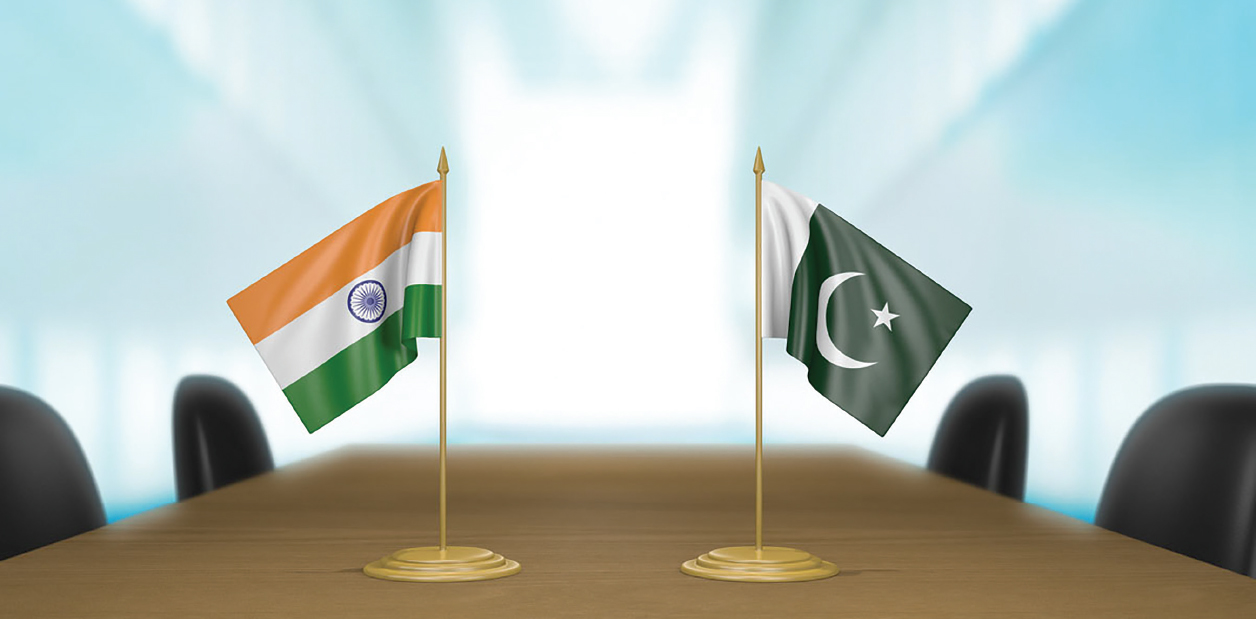
A question arises from the presumption that “most people of Pakistan and India favour normalisation of the bilateral relations between the two countries.” This may well be true as it implies that the ordinary citizen in both countries would prefer to live in a state of peaceful co-existence. It also implies that under normal circumstances there is more that binds the people together than divides them.
There are certain realities of the partition of the sub-continent that need to be looked at to work out what came to define the relations between the two nations. It was the politics confined to 11% of the overall population of British India that created the conditions that led to the division. Our colonial masters ensured that popular will was confined to those who constituted the elite and then set about to use the politics of division to create the barriers along religious lines with the intention to keep the people at each other’s throats to enable them to continue to rule undivided India. Religion was brought into politics by this elite, encouraged by the British, ensuring that the people came to distrust each other. Its impact continues to cast its shadow on the people of the two countries who otherwise have more commonalities that should bring them together, than push them apart.
Once the proverbial Pandora’s Box was brought into the equation and as the British lost their hold over India the issue of Britain’s geo-strategic interests covering two factors, the oil rich Middle East and the expanding footprint of the Cold War, surfaced. A Congress ruled India was seen as a pacifist that would never agree to any alliance while Pakistan, dominated by the Punjabi Muslims was seen as a trusted ally.
The elite agreed to the division as it brought them into power with little if any clear commitment to securing the lives and livelihoods of the common people. Ever since then, the people of the two nations have lived in a world created out of distrust, with little care for their interests or sentiments.
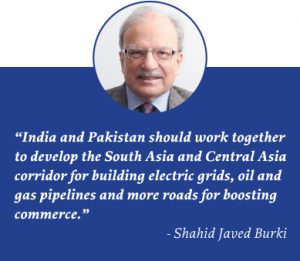 The Pakistani elite, for instance, is aware that India does not have the intention to undo the division. In fact, over the years, political and social developments in Pakistan have convinced India that as a people it was better for us to live apart. For India, a prosperous Pakistan where the people are secure in their lives and availability of jobs, removes the fodder that feeds the actions of the fundamentalists.
Coming to the situation as it has come to exist, neither the establishment in Islamabad nor the one in New Delhi, would be under any illusion that the issue of J&K can move in any direction but towards an ultimate settlement where the current line of control shall become the international boundary between the two countries. Playing politics over this for domestic gain is puerile, self-defeating and serves no real purpose other than to meet the demands of entrenched opinion that is driven by its own selfish needs.


Preet Malik is a former Indian ambassador to Myanmar. He has served as a Special Secretary in the Ministry of External Affairs, Government of India. He can be reached at preet@preetmalik.in |
|
Cover Story
|
|
News Buzz
|
Update |
Leave a Reply